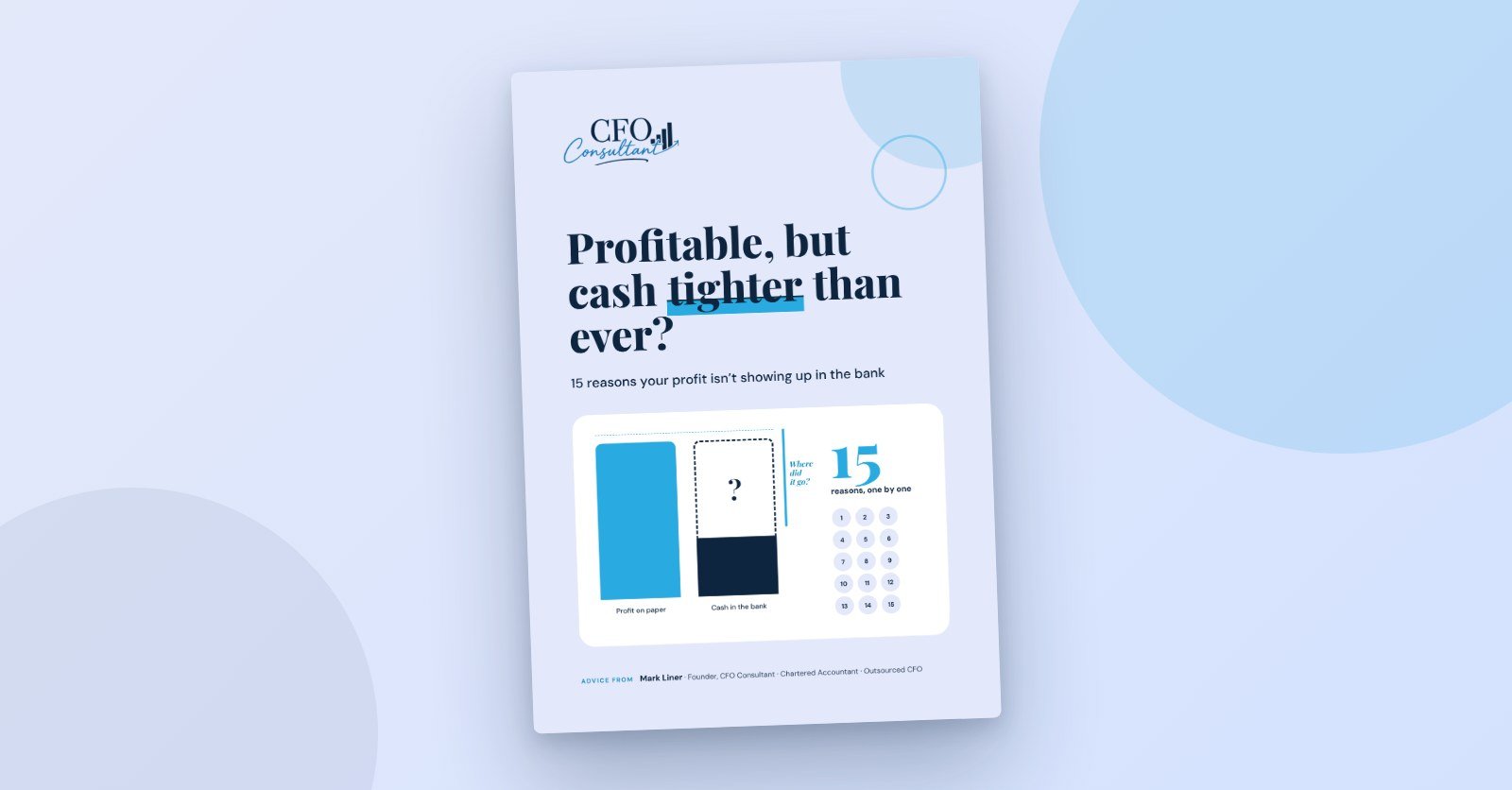
15 reasons your profit isn’t showing up in the bank, and where to look for each one.
Every owner hits the cash gap eventually. For some it happens once: one big job, one slow quarter, one very tight month. For others it keeps repeating, and always at an inopportune moment: the week before payroll, the morning a key supplier wants paying, the day a large order has to be paid for before the customer has paid you.
It hits the owners who are working flat out. You’re putting in the hours, the work keeps coming in, the accounts say you’re profitable, and still the bank balance says otherwise. It’s easy to feel like you’re failing when it’s often a timing issue.
Whether it happens once or on repeat, the choice is the same: know it’s coming, or fall straight into it.
Every quarter, a BAS lands as one large payment. Every week, wages, rent and suppliers need paying, whether or not your customers have paid you yet. If your bank balance is lower than your profit says it should be, the gap is already there, and it keeps growing quietly while you run the business.
The good news is that profit and cash are two different measures, and the gap between them always has reasons. Mark Liner, an outsourced CFO and chartered accountant with over 30 years’ experience, has set out the 15 most common ones in The Cash Gap Guide. They include:
- Customers paying slower than they did a year ago
- Work finished but not yet invoiced
- Stock on the shelf, which is cash you can’t spend until it sells
- Owner drawings, loan repayments and equipment purchases that leave the bank without touching profit
- The BAS, paid in one hit each quarter
There are ten more. Each comes with a short note on where to look in your accounts, so you can read the Guide in one sitting and tick every reason that sounds familiar.
Enter your name and email and download it straight away. Free.
Why read it now
The gap grows quietly. A slow-paying customer, a bigger stock order or a loan repayment can each look small. Together they can take a profitable year and leave the bank account bare. The earlier you see them, the more choices you have.
Pressure leads to rushed fixes. When cash feels tight, it’s natural to act fast: chase every invoice, delay a supplier, put a hire on hold. Fixes made without the full picture can widen the gap. Decisions made with an understanding of why your cash is where it is, and how it got there, are insightful ones.
Most owners were never shown how their numbers work. In Mark’s experience, well over 90% of owners are working from incomplete figures. That’s a knowledge gap nobody helped close, not a personal failing.
Your accountant keeps you tax compliant. Mark’s job is to make sure your numbers also show how the business is really performing. Different jobs, both needed.
Haven’t got your copy yet? Get The Cash Gap Guide